Koolboks

The company participated in a number of TechEmerge pilots which are described below. More data on the pilot experience is available from the report "TechEmerge Sustainable Cooling Innovation Program: Results and Lessons Learned".
Solutions
The Koolboks Solar Chiller is a fully integrated commercial refrigeration system powered by solar energy. Designed for off-grid and weak-grid markets, it delivers uninterrupted beverage and food cooling while eliminating generator dependence. With embedded IoT and PAYGO financing, it provides scalable, distributed solar cold-chain infrastructure for retailers, distributors, and logistics operators.
Koolboks via Koolenergies provides a "Green Building Energy-as-a-Service" solution for commercial real estate. We deploy 5-30 KVA hybrid inverter systems in office buildings and retail centers to power HVAC and critical loads with solar+battery storage, eliminating diesel dependence. Our zero-capex model converts energy costs to predictable monthly fees, enabling portfolio-wide decarbonization aligned with IFC's GRIP program without upfront investment from property owners.
The Koolboks Solar Ice Maker is a solar-powered ice production system designed for off-grid and unreliable-grid environments. It integrates solar panels, lithium battery storage, and a smart controller to power ice-making equipment without diesel generators. With embedded PAYGO financing, it enables small businesses and fisheries to access reliable ice production without high upfront costs.
The Koolboks Powerfoot is a solar-powered base that converts any AC freezer (Scanfrost, Bruhm, Thermocool, etc.) into a solar unit. Small businesses keep their existing freezer and eliminate power outages and generator costs. Fits 200L-600L sizes, includes battery storage and USB charging. Available via PAYGO financing with daily payments, making solar accessible to market vendors and traders across Africa.
– 24hrs refrigeration powered by solar energy
– Remote Temperature Monitoring
– Image recognition
– Pay-As-You-Go Technology
The chiller has a storage capacity of 440 liters and measures 705x645x2000mm.
Related pilots
All pilots-
ACES / Koolboks
TechEmerge partnered with the Africa Centre of Excellence for Sustainable Cooling and Cold-Chains (ACES) in Rwanda, to test, develop, and demonstrate sustainable cooling solutions, particularly for health and agriculture.
-
Fan Milk and Koolboks
French innovator Koolboks has developed a technology that harnesses solar energy and stores it in the form of ice batteries strategically arranged in freezers to maximize temperature retention. In this pilot, Koolboks is partnering with Nigeria’s Fan Milk to pilot this IoT-enabled technology to store milk, ice cream, yogurt and other perishable goods in retail stores.
-
Amo Farm and Koolboks
French innovator Koolboks is teaming up with Nigerian integrated poultry company Amo Farm to pilot an solar-powered freezer equipped with IoT technology to store frozen poultry produce at the last mile. They are also field-testing a Koolboks vaccine fridge to assess future opportunities for Amo Farm to diversify its operations.
-
Alyx and Koolboks
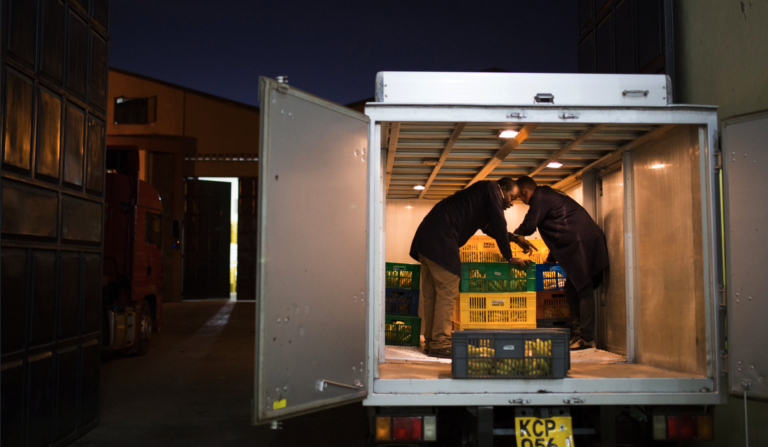
In this pilot, French innovator Koolboks and Nigerian logistics company Alyx will pilot solar-powered storage trailers with local farmers requiring cold chain transport for their fruit and vegetable produce. The pilot aims to reduce Alyx’s last mile distribution costs and prevent food waste and losses for farmers, which can reach 40-60 percent using conventional, unrefrigerated transport methods.